

Others
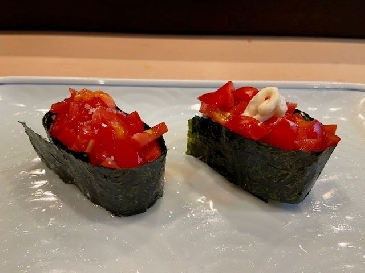

Furit tomato
【Features】
Fruit tomatoes boast high sugar content. While regular tomatoes typically measure 4 to 6 degrees Brix, fruit tomatoes reach 8 degrees Brix or higher, with premium varieties sometimes exceeding 10 to 12 degrees Brix. Fruit tomato is not a specific variety name but a general term for tomatoes grown using special cultivation methods to enhance sugar content (typically 8 degrees Brix or higher). By restricting water and inducing stress on the tomato, sweetness and umami are concentrated. The result is a tomato with no grassy or bitter aftertaste, offering a clean finish.
【Sushi】
High-sugar vegetables, when eaten plain, often have a pronounced sweetness but can feel somewhat lacking in definition (they have fewer elements that serve as flavor reference points, like fat, strong saltiness, or acidity). The acidity of the sushi rice vinegar adds definition to the vegetable's sweetness, making it more distinct and recognizable. Furthermore, the acidity tightens the aftertaste, preventing the sweetness from lingering heavily, resulting in a well-balanced overall flavor.
【Umami Components】
Glutamic acid, guanylic acid
【Five Methods/Five Colors/Five Flavors】
Raw/Red/Sweet
【Seasoning】
Nori seaweed/Olive oil
*Consuming a small amount of olive oil raw with vegetables enhances the absorption rate of fat-soluble vitamins (vitamin D) and antioxidant components (carotenoids).