

Others
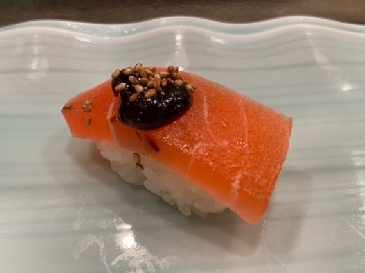
Maybe not salmon
Konjac is approximately 97% water, with the remaining 3% containing water-soluble dietary fiber “glucomannan”, calcium, potassium, and other nutrients. It is a low-calorie food (about 5-6 kcal per 100g) and is considered a health food. It is expected to have effects such as regulating the intestinal environment, lowering cholesterol, and aiding weight loss by promoting a feeling of fullness.
【Can it supplement nutrients that vegans and vegetarians tend to lack?】
None
【Features】
Konjac (also known as konnyaku) has a uniquely soft and springy texture. Once solidified, it becomes insoluble in water and exhibits strong elasticity. The basic process involves boiling konjac yam, mashing it, mixing it with a solidifying agent (an alkaline substance like baking soda), shaping it, and then boiling it again. In Western countries, it is primarily known as a diet food due to its extremely low calorie content (5-7 kilocalories per 100g) and rich content of glucomannan, a type of dietary fiber.
【Sushi】
It has the texture of eating a salmon nigiri.
【Umami Components】
None
【Five Methods/Five Colors/Five Flavors】
Sliced/Red/
【Seasoning】
“Dengaku Miso” is a sweet and savory miso sauce used for “miso dengaku,” a dish where tofu, konjac, vegetables, and other ingredients are coated with the sauce and grilled. It is made by blending Hatcho miso, sugar, mirin, sake, and kombu dashi.
Hatcho miso is a type of “bean miso” made solely from “bean koji” (malted soybeans), fermented for over two years using only soybeans and salt. In contrast, regular miso (such as rice miso) uses rice koji or barley koji and ferments for a shorter period than Hatcho miso. Hatcho miso is characterized by its higher protein content compared to other miso varieties. It contains 17.2g per 100g, significantly more than sweet miso (9.7g) or red miso (13.1g). It is characterized by a rich, deep flavor, a subtle sourness, and a unique astringency and bitterness. Its low sugar content results in less sweetness. Furthermore, the brown pigment melanoidin is known for its potent antioxidant properties, helping to suppress the increase of reactive oxygen species. Notably, the melanoidin content in Hatcho miso is exceptionally high, containing approximately five times more than other miso varieties.