

Others
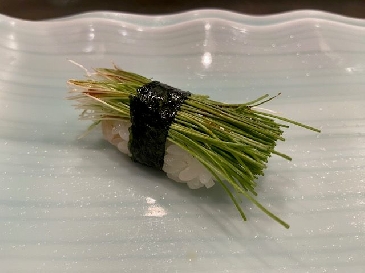

Young green onion shoots (Menegi)
【Supplement nutrients that are likely to be deficient】
None
【Features】
Young green onions (menegi) are low in calories yet rich in vitamins C, K, A (beta-carotene), potassium, calcium, dietary fiber, and more. They offer the fatigue-reducing and blood circulation-promoting effects characteristic of onions due to their allicin content, making them a nutrient-packed vegetable beneficial for health and beauty. They are particularly rich in vitamin A compared to mature onions (Negi).
【Sushi】
In traditional seafood sushi, young green onion sushi is served to refresh the palate. Its slight pungency and cooling sensation enhance the flavors of other seafood toppings, while also offering the onion's natural antibacterial and digestive benefits.
【Umami Components】
Glutamic acid, an amino acid, is a representative umami component found in various ingredients like kelp and tomatoes. It is also abundant in onion family vegetables like leeks, enhancing the umami of dishes.
Furthermore, the distinctive flavor and aroma of leeks come from volatile compounds called allyl sulfides (derived from compounds like alliin). While not an umami component itself, this compound stimulates appetite and enhances the effects of other umami components.
【Five Methods/Five Colors/Five Flavors】
Raw/Green (Blue)/Bitter
【Seasoning】
Obi nori refers to nori used to tightly wrap sushi toppings around the rice. It is also the nori used for gunkan-maki. It is nori cut into long, narrow strips.
Vitamin B12 is not found in most plant-based foods, making deficiency particularly common in diets like veganism that exclude animal products. One sheet of nori (210×190: approx. 3g) contains 1.74μg of vitamin B12, covering a large portion of the 2.4μg daily recommended intake for adult men and women. In this omakase course, consuming approximately 1g of nori means about 0.6μg was supplemented.